
Director of the Sales Department of the Russian Federation and the CIS
The adoption of the Climate Doctrine and the establishment of a Carbon Units Registry are driving companies to reduce their carbon footprint and adopt environmentally friendly technologies. As a result, many businesses are incorporating environmental responsibility and resource efficiency into their long-term development strategies.
Solar energy plays a key role in achieving sustainable development goals. The more businesses understand solar power systems, the easier it is to implement advanced technological solutions and leverage them to reduce environmental impact, achieve energy independence, lower electricity costs, improve competitiveness, enhance brand reputation, and attract investments.
Let's explore the structure and components of solar panels, their advantages and limitations, and key features to maximize the efficiency of your solar power system. Topics include the quality and performance of solar panels, optimal tilt angles, and the importance of regular maintenance.
How Solar Power Plants Work
A photovoltaic (PV) system is a facility that generates electricity using renewable energy sources.
There are two types of solar power plants (SPPs) based on their operational principles.
- Solar thermal power plants. These systems convert sunlight into thermal energy, subsequently transforming into electricity. The thermal energy heats a thermal fluid that powers thermal machinery, such as steam or air turbines, Stirling engines, or thermoelectric generators.
- Photovoltaic power plants. The systems that directly convert sunlight into electricity using photovoltaic cells.
Photovoltaic Power Plants
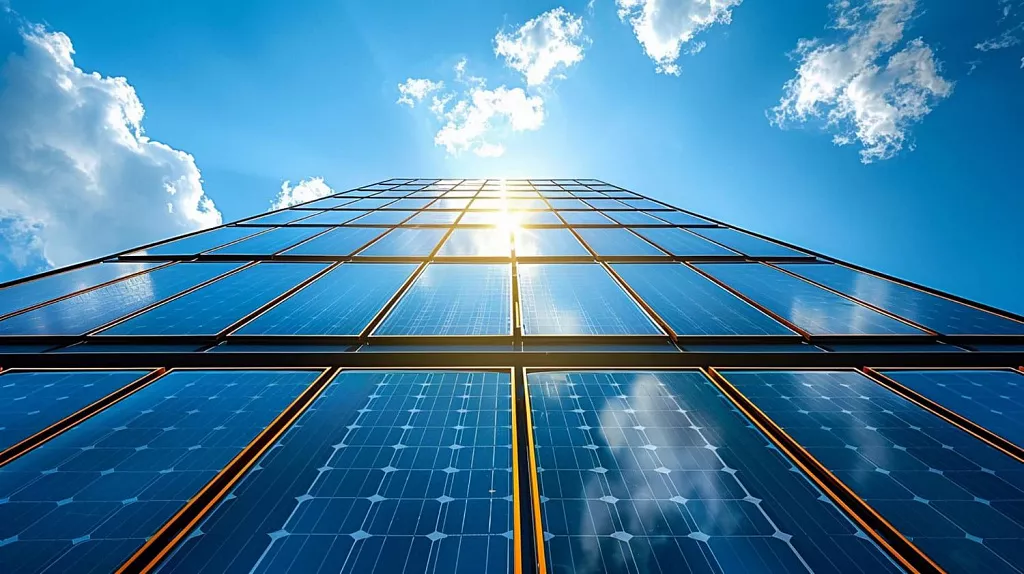
Photovoltaic power stations are composed of solar modules comprising numerous photovoltaic cells. Each cell is based on a semiconductor material, most commonly silicon, which releases electrons when exposed to sunlight, thereby generating an electric current.
PV solar plants are more commonly used than other solar power systems due to their cost-effectiveness and versatility. They can efficiently supply electricity to individual buildings or be scaled up to form large energy complexes. Let's explore their features in detail.
Types of Photovoltaic Power Plants for Commercial and Industrial Use
Grid-Tied Solar Systems
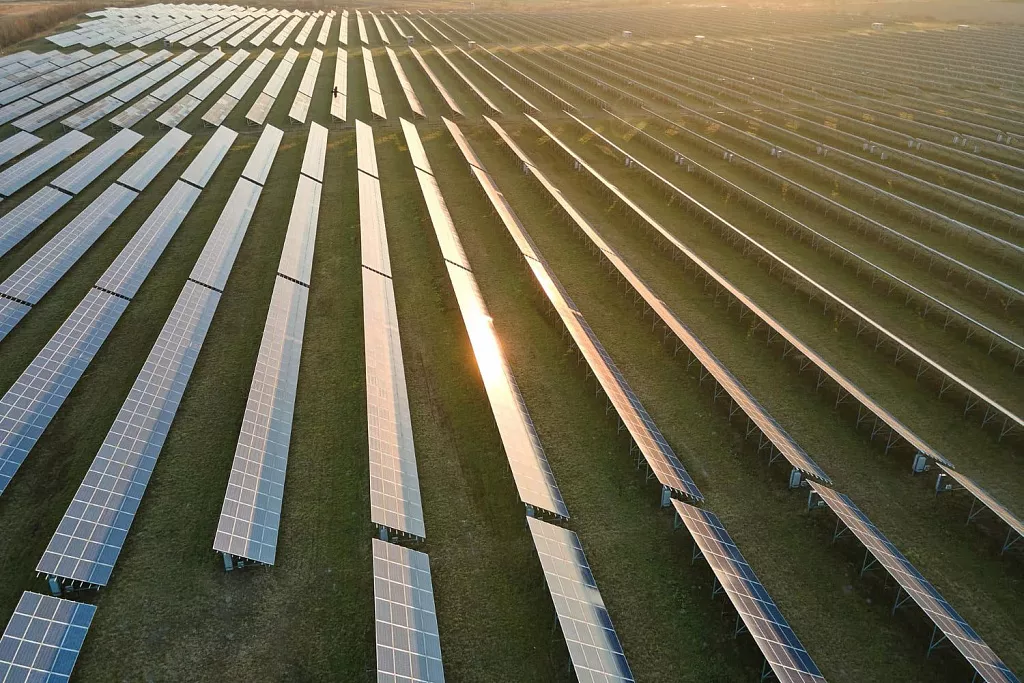
Grid-tied PV systems are suitable for facilities with access to a centralized power grid. Their key advantage is the significant reduction in electricity costs, as approximately 40% of a company's energy needs can be met by self-generated electricity.
When the energy generated by solar panels is not enough (such as at night or during cloudy weather), the system automatically switches to drawing power from the centralized power source.
Grid-tied PV systems operate on a hybrid model, meaning that some energy consumed comes from solar panels while the remainder is drawn from the grid.
The surplus electricity generated during sunny weather can be fed back into the grid. It not only allows owners of solar power systems to generate additional revenue but also provides an opportunity to offset electricity costs by crediting the value of the surplus energy.
Stand-Alone Hybrid Power Plants
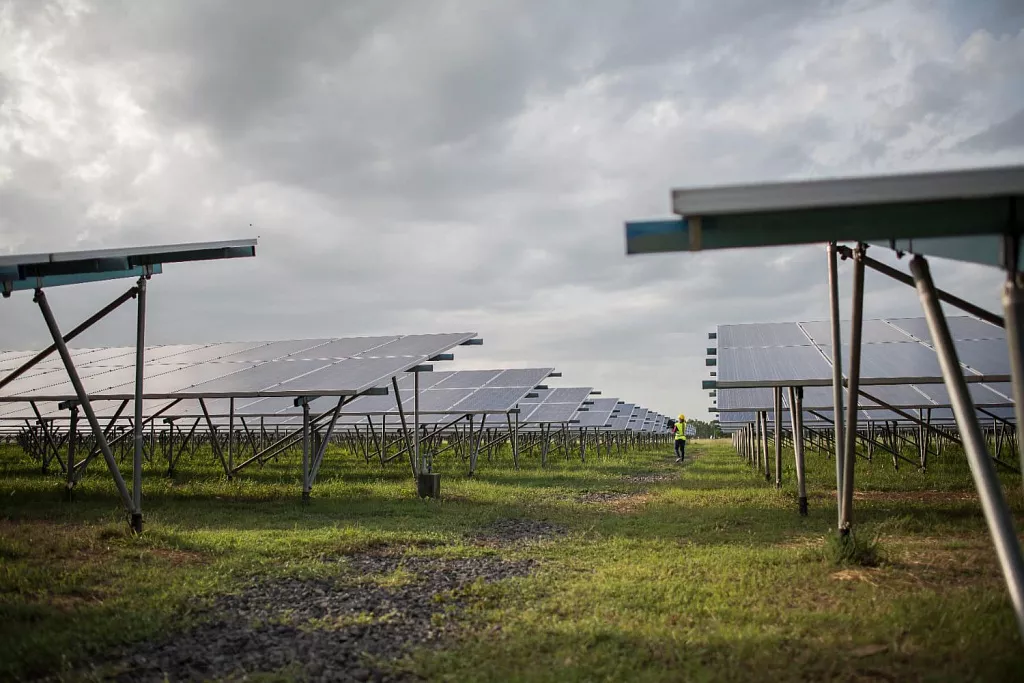
The off-grid solar systems operate entirely independently from a central power grid. It makes them the better choice for remote or hard-to-access locations where connection to the centralized grid is either impossible or economically impractical. Stand-alone hybrid power plants are equipped with batteries that store excess energy for use as needed.
Hybrid solar power systems combine photovoltaic panels with additional energy sources, primarily diesel generators but also wind turbines, small hydropower systems, or even biomass generators. These supplementary sources increase the overall capacity of the system and automatically activate when solar panels cannot generate sufficient energy.
Solar-diesel hybrid systems are recommended to ensure reliable electricity supply in remote areas or locations with limited access to centralized energy sources. During daylight hours, solar panels generate electricity that can be used directly or stored in batteries for later use. At night or during periods of low sunlight, diesel generators activate automatically to provide uninterrupted power. This approach not only enhances the efficiency of the solar-diesel power system but also significantly reduces fuel consumption and operational costs.
The Basic Components of PV Systems
A photovoltaic power station requires several essential components to convert solar energy into electricity and integrate it into a central grid or operate autonomously. Let's consider them in more detail.
Solar Panels
The panels are the core components of any solar system. Each panel consists of numerous photovoltaic cells that generate direct current (DC) when exposed to sunlight.
Inverters
They convert the DC produced by solar cells into alternating current (AC) that you can use in your power grids.
Mounting Systems
The mounting systems include supports, brackets, and structures that secure solar panels in place. They provide the correct tilt angle for the highest energy generation.
At Unigreen, we carefully calculate the optimal angle during the design stage to maximize energy production. Our goal is to make sure your SPP delivers the best possible performance.
Electrical Equipment
Includes DC junction boxes, AC busbars, wiring, connectors, switches, and safety fuses. They are all necessary to connect the solar panels to the power plant while maintaining the system's safety and reliability.
Monitoring and Management Equipment
Such systems display real-time data on energy production, panel efficiency, and other crucial parameters. They also enable diagnostics and data analysis to optimize performance and prevent potential issues.
Additional Components for Stand-Alone Hybrid Stations
The off-grid hybrid systems require the following list of optional components.
- Battery Storage Systems
The batteries store surplus energy produced by solar panels or wind turbines, ensuring a stable power supply during periods of reduced energy production.
- Controllers and Management Systems
They regulate the charging and discharging of batteries and manage automatic switching between energy sources depending on current conditions. If necessary, management systems can also coordinate the operation of various energy sources to optimize resource usage.
Grid-Tied Solar Power Stations
Grid-tied solar systems include smart meters to control and prevent the flow of excess electricity to the grid.
How We Design Photovoltaic Solar Power Plants
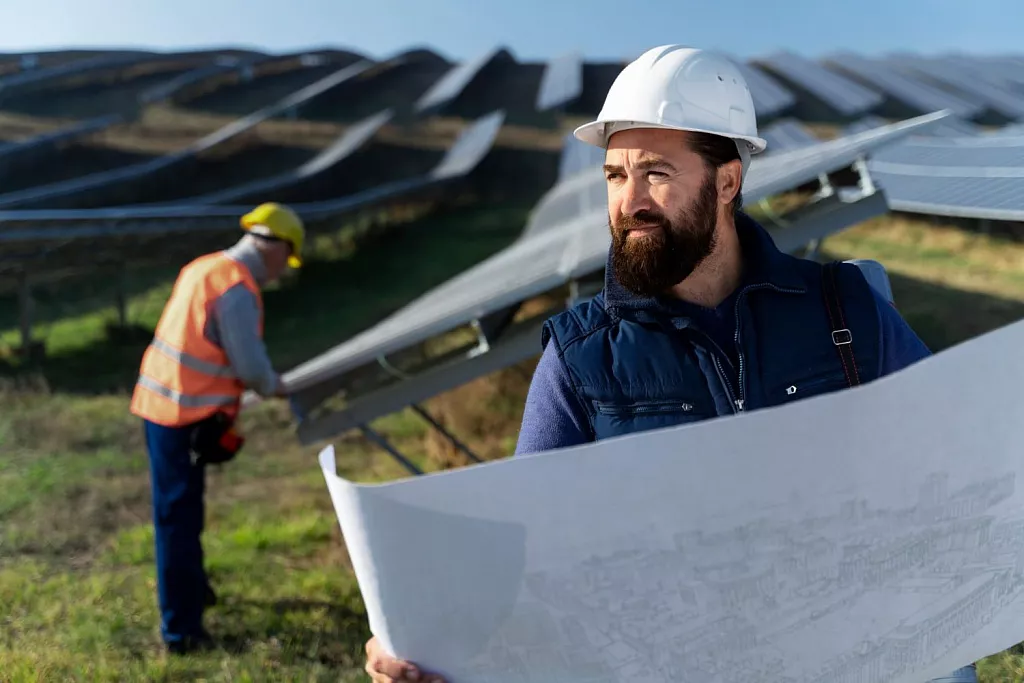
The process begins with a deep analysis of your business's needs. The design team explores the project's strategic goals and makes a detailed economic analysis by calculating payback periods, assessing investments, and forecasting revenue from energy generation.
The tailored approach makes it possible to design a custom solution that meets both your current and future requirements.
Technical and economic features of SPPs demand meticulous planning and finding optimal locations. Site selection must account for factors such as available space for solar panel installation, the number of sunny days, effective solar hours, shading from tall buildings, grid connection possibilities, and the required station capacity for both present and future needs.
For hybrid solar power plants, the type of fuel for backup generators is crucial. The choice depends on fuel availability, cost, and environmental and economic reasons. On-site engineering tests, geological surveys, topographical surveys, and other kinds of research are also required.
In every stage of the designing process, you need highly qualified and experienced professionals who can explain the principles of solar station placement, weigh the advantages and disadvantages of various options, justify their recommendations, and develop a detailed road map. Before starting, the budget must be calculated, the benefits clearly defined, and prices fixed, remaining unchanged until the project is complete.
What Is Essential to Maximize the Efficiency of Solar Power Plants
The process of design and construction of SPP should focus on such key factors to ensure the highest efficiency.
High-Quality Materials and Advanced Technologies
Solar panels with proven efficiency, including high COP, excellent performance in high temperatures and low light conditions, and long service life, are crucial. Modern inverters with minimal energy loss during DC-to-AC conversion are equally important.
Optimal Panel Placement
Choosing the right location by considering all climatic factors and avoiding shading is critical for consistent SPP performance.
Professional Installation and Calibration
To maximize solar radiation capture, panel tilt and orientation must be precisely adjusted. Durable mounting systems resistant to wind, snow loads, and corrosion ensure long-term reliability.
Regular Maintenance and Monitoring
Implementing automatic cleaning systems, if necessary, and routine inspections help maintain peak efficiency over time.
Compliance with High-Quality Standards
Strong and detailed quality control at every stage of the project ensures the reliability and efficiency of the solar station.
Unigreen specializes in advanced solar technologies and has extensive experience designing and implementing SPPs. With over 100 completed projects, including high-capacity systems (1.9 GW completed and 3.5 GW planned by 2027), we have the expertise to make solar stations a powerful tool for improving your business efficiency and competitiveness. We know how to build your SPP and which technologies to use to make it as efficient as possible.
Our team is ready to develop and implement a tailored solution to meet your specific needs and goals.
Director of the Sales Department of the Russian Federation and the CIS